Lymphotoxin beta Receptor Monoclonal Antibody (eBio3C8 (3C8)), Biotin, eBioscience
PRODUCT DETAILS
Host: Rat
Isotype: IgG1, kappa
Clonality: Monoclonal
Clone: eBio3C8 (3C8)
Format: Biotin
Reactivity: Ms
Application: Flow Cytometry
Tested Dilution: 0.5 µg/test
Concentration: 0.5 mg/mL
Storage: 4°C, store in dark, DO NOT FREEZE!
Formulation: PBS with 0.09% sodium azide; pH 7.2
Purification: Affinity chromatography
Data Sheet: TDS
Specific Information
Description: The antibody reacts with mouse lymphotoxin-beta receptor (LTBR). Northern blot analysis of tissues from adult mice showed that expression levels of LTBR mRNA were strong in lung, liver, and kidney, moderate in heart and testes, but weak in brain, thymus, spleen, and lymph nodes. The tumor necrosis factor receptor-related protein is the human receptor for the heterotrimer of lymphotoxin-alpha and lymphotoxin-beta. This LT-alpha/LT-beta heterotrimer (LT-alpha1beta2) is assumed to take part in immunologic reactions by cell-cell contact, but does not bind to either TNFR1 (CD120alpha) or TNFR2 (CD120beta). LTBR is expressed by day 7 embryos, so it has been speculated that the LT-alpha/LT-beta receptor system may also have some function in early embryogenesis.
Applications Reported: This eBio3C8 (3C8) antibody has been reported for use in flow cytometric analysis.
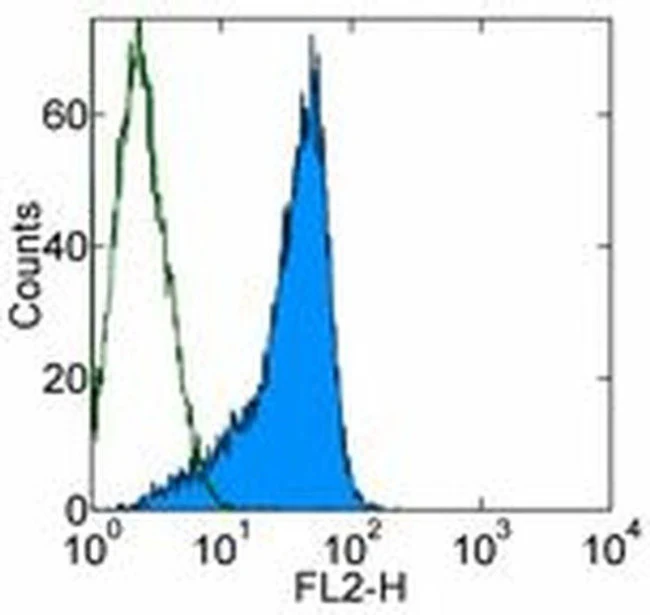
Applications Tested: This eBio3C8 (3C8) antibody has been tested by flow cytometric analysis of NIH/3T3 cells. This can be used at less than or equal to 0.5 µg per test. A test is defined as the amount (µg) of antibody that will stain a cell sample in a final volume of 100 µL. Cell number should be determined empirically but can range from 10^5 to 10^8 cells/test. It is recommended to block Fc gamma-receptors with anti-mouse CD16/32 (Product # 14-0161-85), prior to staining to prevent non-specific binding of eBio3C8. Furthermore, it is recommended that the antibody be carefully titrated for optimal performance in the assay of interest.
Filtration: 0.2 µm post-manufacturing filtered.
For Research Use Only. Not for use in diagnostic procedures. Not for resale without express authorization.
Lymphotoxin beta Receptor Monoclonal Antibody (eBio3C8 (3C8)), Biotin, eBioscience
PRODUCT DETAILS
Host: Rat
Isotype: IgG1, kappa
Clonality: Monoclonal
Clone: eBio3C8 (3C8)
Format: Biotin
Reactivity: Ms
Application: Flow Cytometry
Tested Dilution: 0.5 µg/test
Concentration: 0.5 mg/mL
Storage: 4°C, store in dark, DO NOT FREEZE!
Formulation: PBS with 0.09% sodium azide; pH 7.2
Purification: Affinity chromatography
Data Sheet: TDS
Specific Information
Description: The antibody reacts with mouse lymphotoxin-beta receptor (LTBR). Northern blot analysis of tissues from adult mice showed that expression levels of LTBR mRNA were strong in lung, liver, and kidney, moderate in heart and testes, but weak in brain, thymus, spleen, and lymph nodes. The tumor necrosis factor receptor-related protein is the human receptor for the heterotrimer of lymphotoxin-alpha and lymphotoxin-beta. This LT-alpha/LT-beta heterotrimer (LT-alpha1beta2) is assumed to take part in immunologic reactions by cell-cell contact, but does not bind to either TNFR1 (CD120alpha) or TNFR2 (CD120beta). LTBR is expressed by day 7 embryos, so it has been speculated that the LT-alpha/LT-beta receptor system may also have some function in early embryogenesis.
Applications Reported: This eBio3C8 (3C8) antibody has been reported for use in flow cytometric analysis.
Applications Tested: This eBio3C8 (3C8) antibody has been tested by flow cytometric analysis of NIH/3T3 cells. This can be used at less than or equal to 0.5 µg per test. A test is defined as the amount (µg) of antibody that will stain a cell sample in a final volume of 100 µL. Cell number should be determined empirically but can range from 10^5 to 10^8 cells/test. It is recommended to block Fc gamma-receptors with anti-mouse CD16/32 (Product # 14-0161-85), prior to staining to prevent non-specific binding of eBio3C8. Furthermore, it is recommended that the antibody be carefully titrated for optimal performance in the assay of interest.
Filtration: 0.2 µm post-manufacturing filtered.
For Research Use Only. Not for use in diagnostic procedures. Not for resale without express authorization.
Product Information
Product Information
Shipping & Returns
Shipping & Returns
Description
PRODUCT DETAILS
Host: Rat
Isotype: IgG1, kappa
Clonality: Monoclonal
Clone: eBio3C8 (3C8)
Format: Biotin
Reactivity: Ms
Application: Flow Cytometry
Tested Dilution: 0.5 µg/test
Concentration: 0.5 mg/mL
Storage: 4°C, store in dark, DO NOT FREEZE!
Formulation: PBS with 0.09% sodium azide; pH 7.2
Purification: Affinity chromatography
Data Sheet: TDS
Specific Information
Description: The antibody reacts with mouse lymphotoxin-beta receptor (LTBR). Northern blot analysis of tissues from adult mice showed that expression levels of LTBR mRNA were strong in lung, liver, and kidney, moderate in heart and testes, but weak in brain, thymus, spleen, and lymph nodes. The tumor necrosis factor receptor-related protein is the human receptor for the heterotrimer of lymphotoxin-alpha and lymphotoxin-beta. This LT-alpha/LT-beta heterotrimer (LT-alpha1beta2) is assumed to take part in immunologic reactions by cell-cell contact, but does not bind to either TNFR1 (CD120alpha) or TNFR2 (CD120beta). LTBR is expressed by day 7 embryos, so it has been speculated that the LT-alpha/LT-beta receptor system may also have some function in early embryogenesis.
Applications Reported: This eBio3C8 (3C8) antibody has been reported for use in flow cytometric analysis.
Applications Tested: This eBio3C8 (3C8) antibody has been tested by flow cytometric analysis of NIH/3T3 cells. This can be used at less than or equal to 0.5 µg per test. A test is defined as the amount (µg) of antibody that will stain a cell sample in a final volume of 100 µL. Cell number should be determined empirically but can range from 10^5 to 10^8 cells/test. It is recommended to block Fc gamma-receptors with anti-mouse CD16/32 (Product # 14-0161-85), prior to staining to prevent non-specific binding of eBio3C8. Furthermore, it is recommended that the antibody be carefully titrated for optimal performance in the assay of interest.
Filtration: 0.2 µm post-manufacturing filtered.
For Research Use Only. Not for use in diagnostic procedures. Not for resale without express authorization.