CD365 (Tim-1) Monoclonal Antibody (RMT1-4), eBioscience
PRODUCT DETAILS
Host: Rat
Isotype: IgG2b, kappa
Clonality: Monoclonal
Clone: RMT1-4
Reactivity: Ms
Application: Flow Cytometry
Tested Dilution: 0.5 µg/test
Concentration: 0.5 mg/mL
Storage: 4°C
Formulation: PBS with 0.09% sodium azide; pH 7.2
Purification: Affinity chromatography
Data Sheet: TDS
Specific Information
Description: The RMT1-4 monoclonal antibody reacts with mouse CD365 (also known as TIM1 and HAVCR1) and is a member of the T cell immunoglobulin domain, mucin-like domain (TIM) gene family. CD365 has been found on activated CD4+ T cells, mast cells, and a subset of B cells. CD365 is involved in renal injury, tissue homeostasis, and T cell costimulation. CD365 promotes the differentiation of Th2 cells and the production of IL-4. CD365 can bind several ligands, including Hepatitis A virus, phosphatidylserine, TIM4, IgA, as well as itself. CD365 and TIM4 can mediate uptake of apoptotic cells through recognition of phosphatidylserine. CD365, as well as the other TIM family members, are associated with susceptibility to atopic and autoimmune diseases. In humans, certain polymorphic variants of CD365 are strongly associated with protection against atopy, and this association occurs only in individuals who have had past infection with hepatitis A virus (HAV).
Applications Reported: The RMT1-4 antibody has been reported for use in flow cytometric analysis.
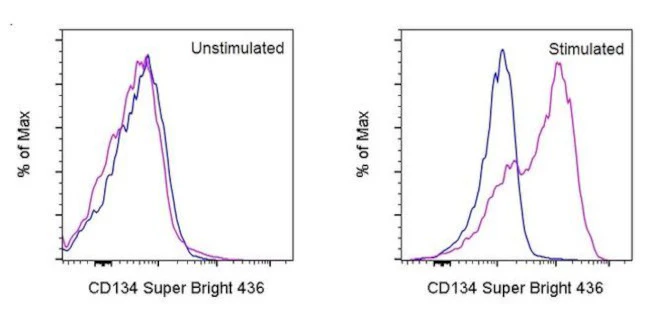
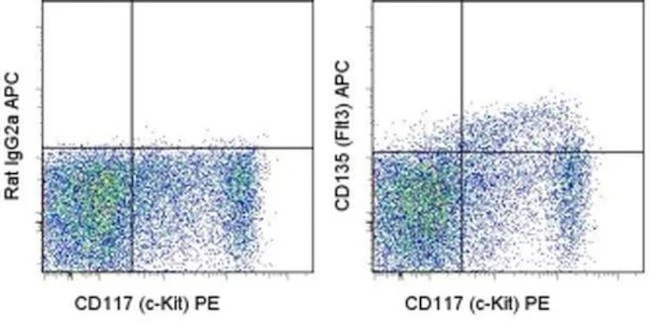
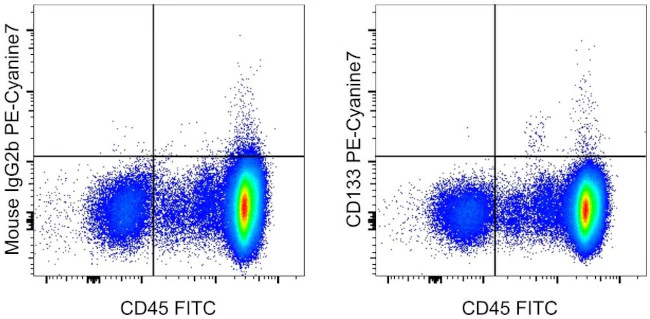
Applications Tested: This RMT1-4 antibody has been tested by flow cytometric analysis of mouse CD365 (TIM1) transfected cells. This can be used at less than or equal to 0.5 µg per test. A test is defined as the amount (µg) of antibody that will stain a cell sample in a final volume of 100 µL. Cell number should be determined empirically but can range from 10^5 to 10^8 cells/test. It is recommended that the antibody be carefully titrated for optimal performance in the assay of interest.
Purity: Greater than 90%, as determined by SDS-PAGE.
Aggregation: Less than 10%, as determined by HPLC.
Filtration: 0.2 µm post-manufacturing filtered.
For Research Use Only. Not for use in diagnostic procedures. Not for resale without express authorization.
Original: $275.00
-70%$275.00
$82.50CD365 (Tim-1) Monoclonal Antibody (RMT1-4), eBioscience
PRODUCT DETAILS
Host: Rat
Isotype: IgG2b, kappa
Clonality: Monoclonal
Clone: RMT1-4
Reactivity: Ms
Application: Flow Cytometry
Tested Dilution: 0.5 µg/test
Concentration: 0.5 mg/mL
Storage: 4°C
Formulation: PBS with 0.09% sodium azide; pH 7.2
Purification: Affinity chromatography
Data Sheet: TDS
Specific Information
Description: The RMT1-4 monoclonal antibody reacts with mouse CD365 (also known as TIM1 and HAVCR1) and is a member of the T cell immunoglobulin domain, mucin-like domain (TIM) gene family. CD365 has been found on activated CD4+ T cells, mast cells, and a subset of B cells. CD365 is involved in renal injury, tissue homeostasis, and T cell costimulation. CD365 promotes the differentiation of Th2 cells and the production of IL-4. CD365 can bind several ligands, including Hepatitis A virus, phosphatidylserine, TIM4, IgA, as well as itself. CD365 and TIM4 can mediate uptake of apoptotic cells through recognition of phosphatidylserine. CD365, as well as the other TIM family members, are associated with susceptibility to atopic and autoimmune diseases. In humans, certain polymorphic variants of CD365 are strongly associated with protection against atopy, and this association occurs only in individuals who have had past infection with hepatitis A virus (HAV).
Applications Reported: The RMT1-4 antibody has been reported for use in flow cytometric analysis.
Applications Tested: This RMT1-4 antibody has been tested by flow cytometric analysis of mouse CD365 (TIM1) transfected cells. This can be used at less than or equal to 0.5 µg per test. A test is defined as the amount (µg) of antibody that will stain a cell sample in a final volume of 100 µL. Cell number should be determined empirically but can range from 10^5 to 10^8 cells/test. It is recommended that the antibody be carefully titrated for optimal performance in the assay of interest.
Purity: Greater than 90%, as determined by SDS-PAGE.
Aggregation: Less than 10%, as determined by HPLC.
Filtration: 0.2 µm post-manufacturing filtered.
For Research Use Only. Not for use in diagnostic procedures. Not for resale without express authorization.
Product Information
Product Information
Shipping & Returns
Shipping & Returns
Description
PRODUCT DETAILS
Host: Rat
Isotype: IgG2b, kappa
Clonality: Monoclonal
Clone: RMT1-4
Reactivity: Ms
Application: Flow Cytometry
Tested Dilution: 0.5 µg/test
Concentration: 0.5 mg/mL
Storage: 4°C
Formulation: PBS with 0.09% sodium azide; pH 7.2
Purification: Affinity chromatography
Data Sheet: TDS
Specific Information
Description: The RMT1-4 monoclonal antibody reacts with mouse CD365 (also known as TIM1 and HAVCR1) and is a member of the T cell immunoglobulin domain, mucin-like domain (TIM) gene family. CD365 has been found on activated CD4+ T cells, mast cells, and a subset of B cells. CD365 is involved in renal injury, tissue homeostasis, and T cell costimulation. CD365 promotes the differentiation of Th2 cells and the production of IL-4. CD365 can bind several ligands, including Hepatitis A virus, phosphatidylserine, TIM4, IgA, as well as itself. CD365 and TIM4 can mediate uptake of apoptotic cells through recognition of phosphatidylserine. CD365, as well as the other TIM family members, are associated with susceptibility to atopic and autoimmune diseases. In humans, certain polymorphic variants of CD365 are strongly associated with protection against atopy, and this association occurs only in individuals who have had past infection with hepatitis A virus (HAV).
Applications Reported: The RMT1-4 antibody has been reported for use in flow cytometric analysis.
Applications Tested: This RMT1-4 antibody has been tested by flow cytometric analysis of mouse CD365 (TIM1) transfected cells. This can be used at less than or equal to 0.5 µg per test. A test is defined as the amount (µg) of antibody that will stain a cell sample in a final volume of 100 µL. Cell number should be determined empirically but can range from 10^5 to 10^8 cells/test. It is recommended that the antibody be carefully titrated for optimal performance in the assay of interest.
Purity: Greater than 90%, as determined by SDS-PAGE.
Aggregation: Less than 10%, as determined by HPLC.
Filtration: 0.2 µm post-manufacturing filtered.
For Research Use Only. Not for use in diagnostic procedures. Not for resale without express authorization.