CD130 (GP130) Monoclonal Antibody (KGP130), APC, eBioscience
PRODUCT DETAILS
Host: Rat
Isotype: IgG2a, kappa
Clonality: Monoclonal
Clone: KGP130
Format: APC
Reactivity: Ms
Application: Flow Cytometry
Tested Dilution: 0.25 µg/test
Concentration: 0.2 mg/mL
Storage: 4°C, store in dark, DO NOT FREEZE!
Formulation: PBS with 0.09% sodium azide; pH 7.2
Purification: Affinity chromatography
Data Sheet: TDS
Specific Information
Description: The KGP130 monoclonal antibody reacts with mouse gp130, also known as CD130. gp130 is a 130 kD Type-I transmembrane glycoprotein containing a 597 amino acid extracellular domain, a single transmembrane domain, and a 277 amino acid cytoplasmic domain. gp130 is a subunit of several heterodimeric cell-surface receptors, including receptors for IL-6, IL-11, IL-27, Oncostatin M, and Leukemia Inhibitory Factor (LIF). The gp130 protein has also been found to exist in a soluble form, which is capable of inhibiting IL-6 signaling. gp130 is expressed mainly on T cells, monocytes, endothelial cells, activated B cells, and plasma cells, and is expressed at lower levels on most leukocytes and epithelial cells. In response to ligand binding, gp130 becomes tyrosine phosphorylated, leading to activation of several signaling pathways including the PI3 kinase, Ras-MAPk and Stat pathways.
Preincubation of mouse splenic T cells with IL-6 is capable of blocking the interaction of KGP130 with gp130, suggesting that the KGP130 binding site lies near the IL-6 interaction domain. Reactivity of KGP130 towards human gp130 has not been observed.
Applications Reported: This KGP130 antibody has been reported for use in flow cytometric analysis.
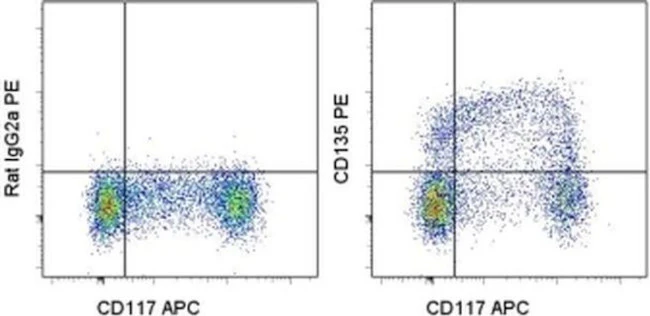
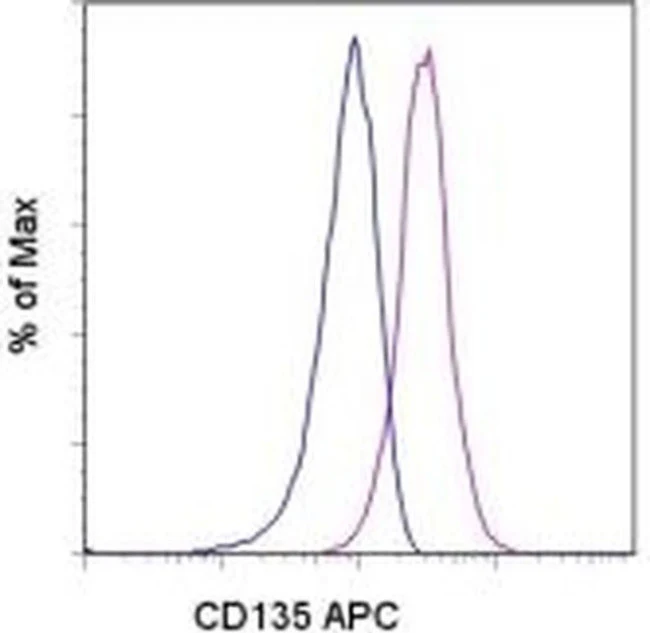
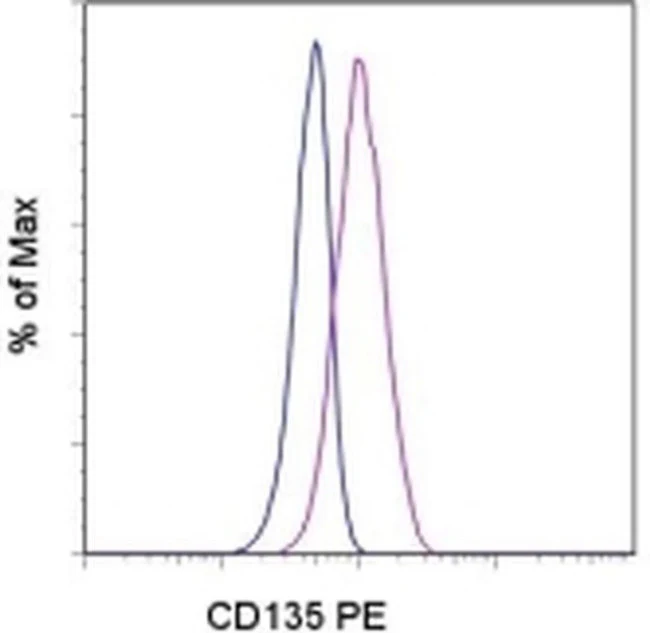
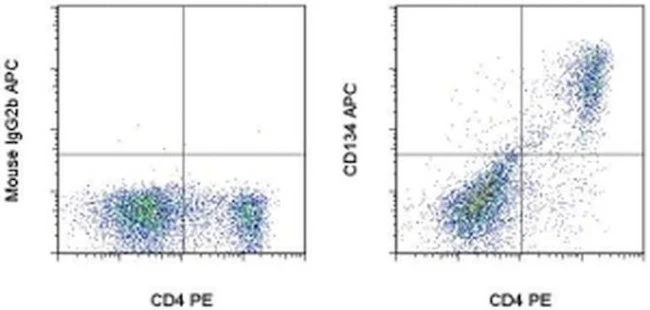
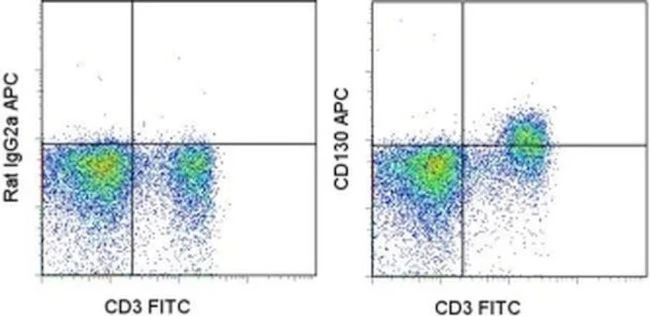
Applications Tested: This KGP130 antibody has been tested by flow cytometric analysis of mouse splenocytes. This can be used at less than or equal to 0.25 µg per test. A test is defined as the amount (µg) of antibody that will stain a cell sample in a final volume of 100 µL. Cell number should be determined empirically but can range from 10^5 to 10^8 cells/test. It is recommended that the antibody be carefully titrated for optimal performance in the assay of interest.
Excitation: 633-647 nm; Emission: 660 nm; Laser: Red Laser.
Filtration: 0.2 µm post-manufacturing filtered.
For Research Use Only. Not for use in diagnostic procedures. Not for resale without express authorization.
Original: $479.00
-70%$479.00
$143.70CD130 (GP130) Monoclonal Antibody (KGP130), APC, eBioscience
PRODUCT DETAILS
Host: Rat
Isotype: IgG2a, kappa
Clonality: Monoclonal
Clone: KGP130
Format: APC
Reactivity: Ms
Application: Flow Cytometry
Tested Dilution: 0.25 µg/test
Concentration: 0.2 mg/mL
Storage: 4°C, store in dark, DO NOT FREEZE!
Formulation: PBS with 0.09% sodium azide; pH 7.2
Purification: Affinity chromatography
Data Sheet: TDS
Specific Information
Description: The KGP130 monoclonal antibody reacts with mouse gp130, also known as CD130. gp130 is a 130 kD Type-I transmembrane glycoprotein containing a 597 amino acid extracellular domain, a single transmembrane domain, and a 277 amino acid cytoplasmic domain. gp130 is a subunit of several heterodimeric cell-surface receptors, including receptors for IL-6, IL-11, IL-27, Oncostatin M, and Leukemia Inhibitory Factor (LIF). The gp130 protein has also been found to exist in a soluble form, which is capable of inhibiting IL-6 signaling. gp130 is expressed mainly on T cells, monocytes, endothelial cells, activated B cells, and plasma cells, and is expressed at lower levels on most leukocytes and epithelial cells. In response to ligand binding, gp130 becomes tyrosine phosphorylated, leading to activation of several signaling pathways including the PI3 kinase, Ras-MAPk and Stat pathways.
Preincubation of mouse splenic T cells with IL-6 is capable of blocking the interaction of KGP130 with gp130, suggesting that the KGP130 binding site lies near the IL-6 interaction domain. Reactivity of KGP130 towards human gp130 has not been observed.
Applications Reported: This KGP130 antibody has been reported for use in flow cytometric analysis.
Applications Tested: This KGP130 antibody has been tested by flow cytometric analysis of mouse splenocytes. This can be used at less than or equal to 0.25 µg per test. A test is defined as the amount (µg) of antibody that will stain a cell sample in a final volume of 100 µL. Cell number should be determined empirically but can range from 10^5 to 10^8 cells/test. It is recommended that the antibody be carefully titrated for optimal performance in the assay of interest.
Excitation: 633-647 nm; Emission: 660 nm; Laser: Red Laser.
Filtration: 0.2 µm post-manufacturing filtered.
For Research Use Only. Not for use in diagnostic procedures. Not for resale without express authorization.
Product Information
Product Information
Shipping & Returns
Shipping & Returns
Description
PRODUCT DETAILS
Host: Rat
Isotype: IgG2a, kappa
Clonality: Monoclonal
Clone: KGP130
Format: APC
Reactivity: Ms
Application: Flow Cytometry
Tested Dilution: 0.25 µg/test
Concentration: 0.2 mg/mL
Storage: 4°C, store in dark, DO NOT FREEZE!
Formulation: PBS with 0.09% sodium azide; pH 7.2
Purification: Affinity chromatography
Data Sheet: TDS
Specific Information
Description: The KGP130 monoclonal antibody reacts with mouse gp130, also known as CD130. gp130 is a 130 kD Type-I transmembrane glycoprotein containing a 597 amino acid extracellular domain, a single transmembrane domain, and a 277 amino acid cytoplasmic domain. gp130 is a subunit of several heterodimeric cell-surface receptors, including receptors for IL-6, IL-11, IL-27, Oncostatin M, and Leukemia Inhibitory Factor (LIF). The gp130 protein has also been found to exist in a soluble form, which is capable of inhibiting IL-6 signaling. gp130 is expressed mainly on T cells, monocytes, endothelial cells, activated B cells, and plasma cells, and is expressed at lower levels on most leukocytes and epithelial cells. In response to ligand binding, gp130 becomes tyrosine phosphorylated, leading to activation of several signaling pathways including the PI3 kinase, Ras-MAPk and Stat pathways.
Preincubation of mouse splenic T cells with IL-6 is capable of blocking the interaction of KGP130 with gp130, suggesting that the KGP130 binding site lies near the IL-6 interaction domain. Reactivity of KGP130 towards human gp130 has not been observed.
Applications Reported: This KGP130 antibody has been reported for use in flow cytometric analysis.
Applications Tested: This KGP130 antibody has been tested by flow cytometric analysis of mouse splenocytes. This can be used at less than or equal to 0.25 µg per test. A test is defined as the amount (µg) of antibody that will stain a cell sample in a final volume of 100 µL. Cell number should be determined empirically but can range from 10^5 to 10^8 cells/test. It is recommended that the antibody be carefully titrated for optimal performance in the assay of interest.
Excitation: 633-647 nm; Emission: 660 nm; Laser: Red Laser.
Filtration: 0.2 µm post-manufacturing filtered.
For Research Use Only. Not for use in diagnostic procedures. Not for resale without express authorization.